On Sunday, February 25th, I decided to travel to Schiermonnikoog. Jesse Sinnema had found a Pacific Golden Plover among the wintering golden plovers. The bird had been present for some time, so it seemed like a good option to go look for it. I only needed one more species to be at the top of the Schiermonnikoog list for the first time. I had already tried with a reported Cetti’s Warbler and made an attempt for Atlantic puffin in January, but both attempts failed. Unfortunately, I also couldn’t find the Pacific Golden Plover today (spoiler alert).
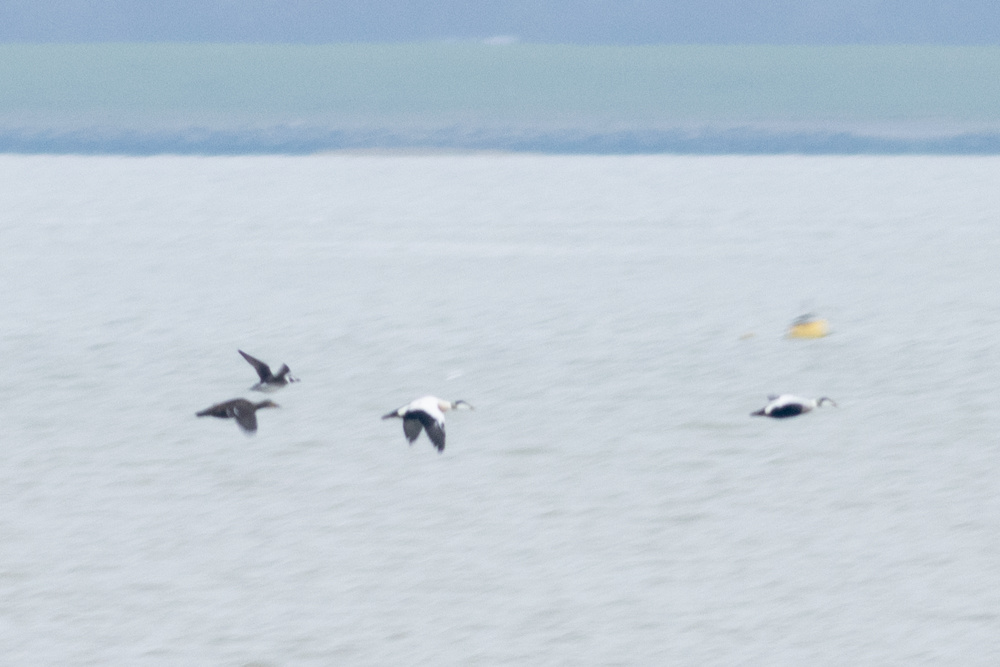
From the boat, we did see a beautiful Long-tailed Duck fly by. Not an easy species these days and for me it was only my 8th self-discovered Long-tailed Duck.
In addition, we had a great spring day on Schier with nice weather, including regular sunshine and almost no wind. The Red-breasted Goose, which was already present, flew solo around the island calling, and the Hooded Crow flew by near the marina at the end of the day.
Searching for the Golden Plovers was not easy. When we arrived on the island, the Golden Plovers took off and flew high non-stop for two hours. After a while, they briefly settled, and during the search, the following bird stood out:
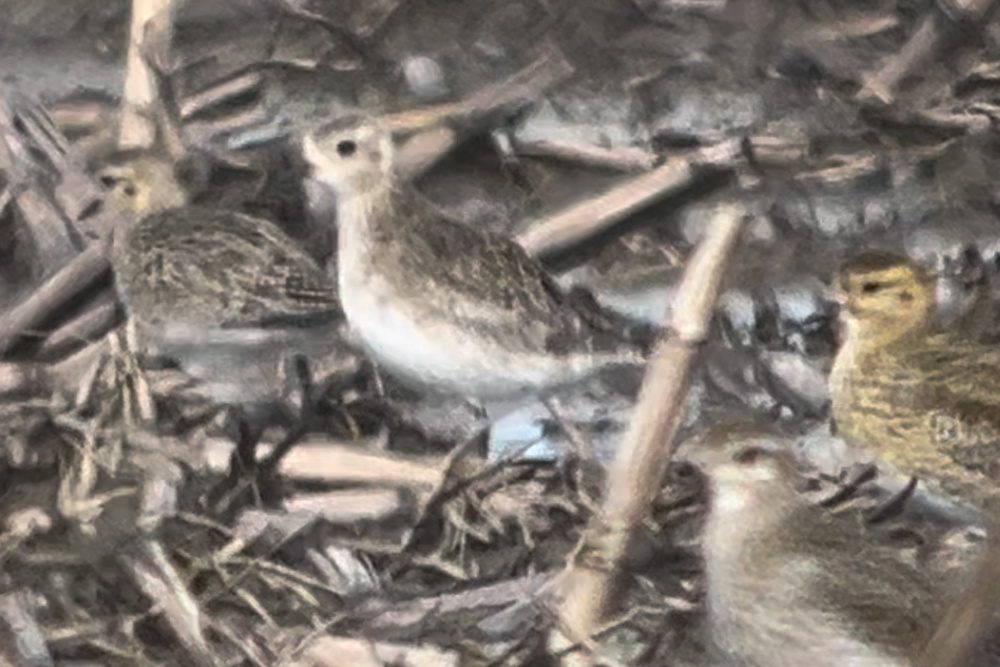
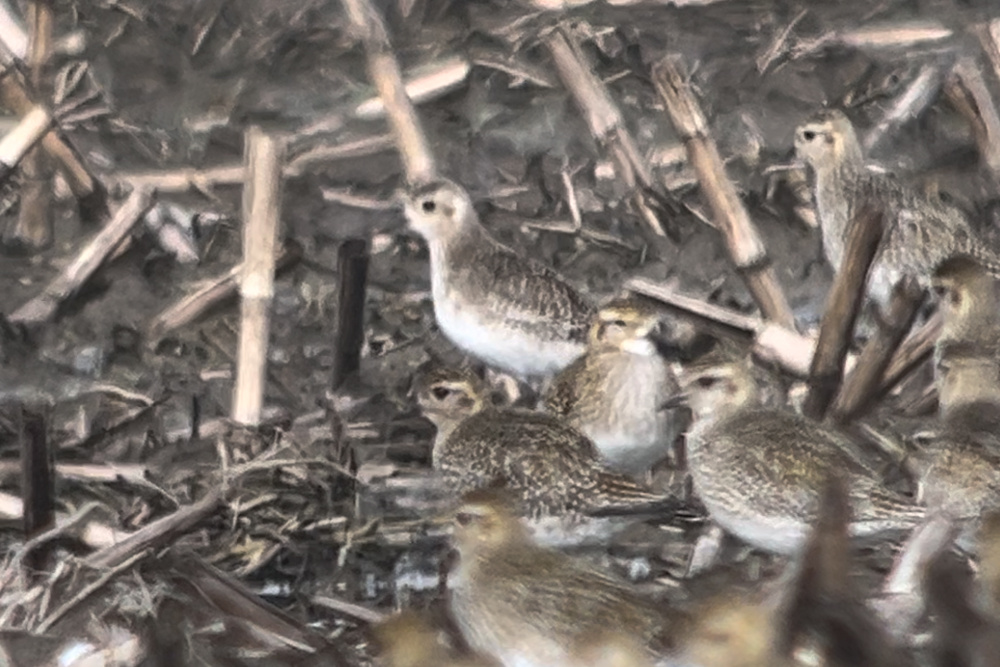


I hadn’t researched in advance what the already found Pacific Golden Plover looked like, so for a moment, I thought I had the bird in sight. This quickly turned out not to be the case. However, this was a fairly pale Golden Plover. A first-winter Pacific Golden Plover would, for example, be more golden on the upper parts. In some photos, the bird somewhat resembles a Caspian Plover. After a while, the bird showed the white underwing, excluding American and Pacific Golden Plovers. People who often observe groups of Golden Plovers know that there are often strange and exciting plovers among them, which ultimately turn out to be European Golden Plovers. This was one of those.
A female Kestrel was also nice to watch along the Wadden Sea dyke. The wing formula already showed it wasn’t a Lesser Kestrel, and the black claws visible in the photo also indicated it was unfortunately a Common Kestrel.

At the end of the search for the Golden Plover, a White-tailed Eagle actually flew over us. Still not an easy species on the island.
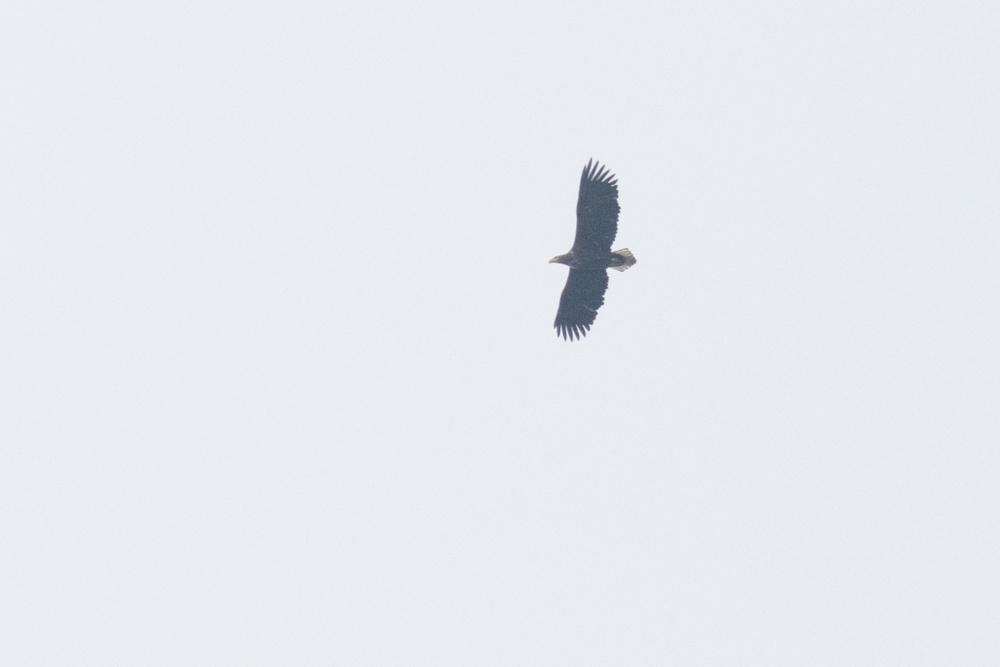
The bird appears to be in its 3rd calendar year. The tail still has a black terminal band. There are also a few spots on the chest. An adult would have a completely white tail, uniform underparts, and a lighter neck. For a 2nd calendar year bird, the tail would already be too white and there would be too much dark patterning on the underwings. A 4th calendar year bird seems the closest match. For that plumage, you wouldn’t expect any spots on the chest anymore, and the neck should be much lighter.
Unfortunately, no Pacific Golden Plover this time, but a new Schiermonnikoog species will surely come soon! We’ll see what spring has in store.

 Invested Birding
Leave a comment