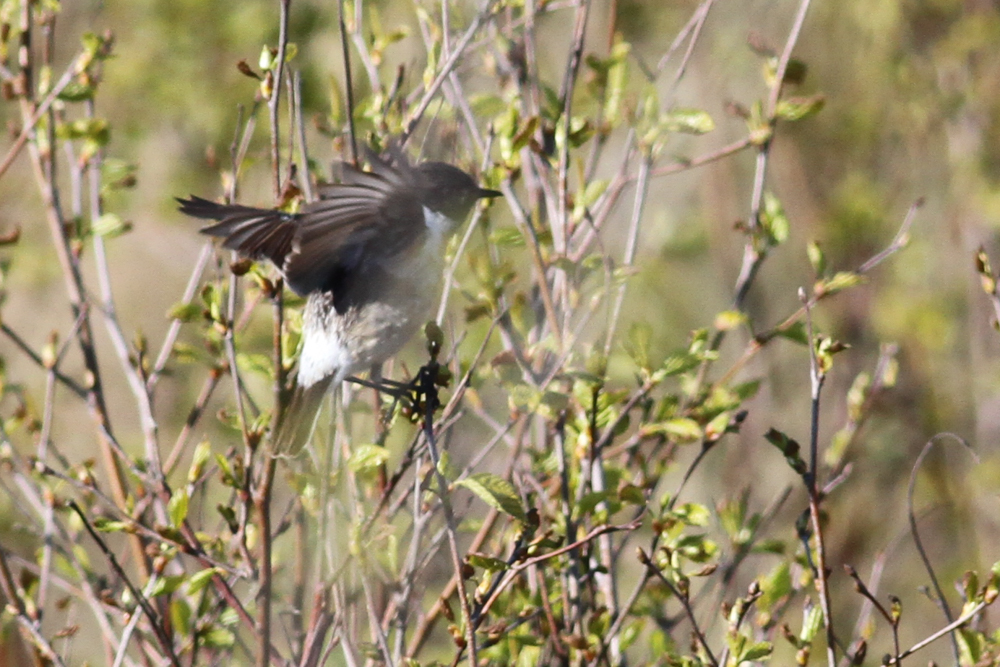
After the post about the Stonechats in Georgia, I delved a bit deeper into the spring Stonechats in the Netherlands. Nowadays, I am outdoors almost daily for my work as an ecologist. I often encounter Stonechats, which I have also photographed. I have also taken pictures of spring Stonechats on Schiermonnikoog. It seemed interesting to me to incorporate this variation into a post as well. A Stonechat that has a lot of white in its plumage often seems a bit unusual, but with this post, I want to show that there is actually a lot of variation among the Stonechats in the Netherlands too.
First, I will show the birds from this past spring that I encountered during my flora work in ‘De Regulieren’ near Tricht. All three birds come from the same area. Besides these birds, I haven’t seen any other male Stonechats in this area. Additionally, they were all paired.
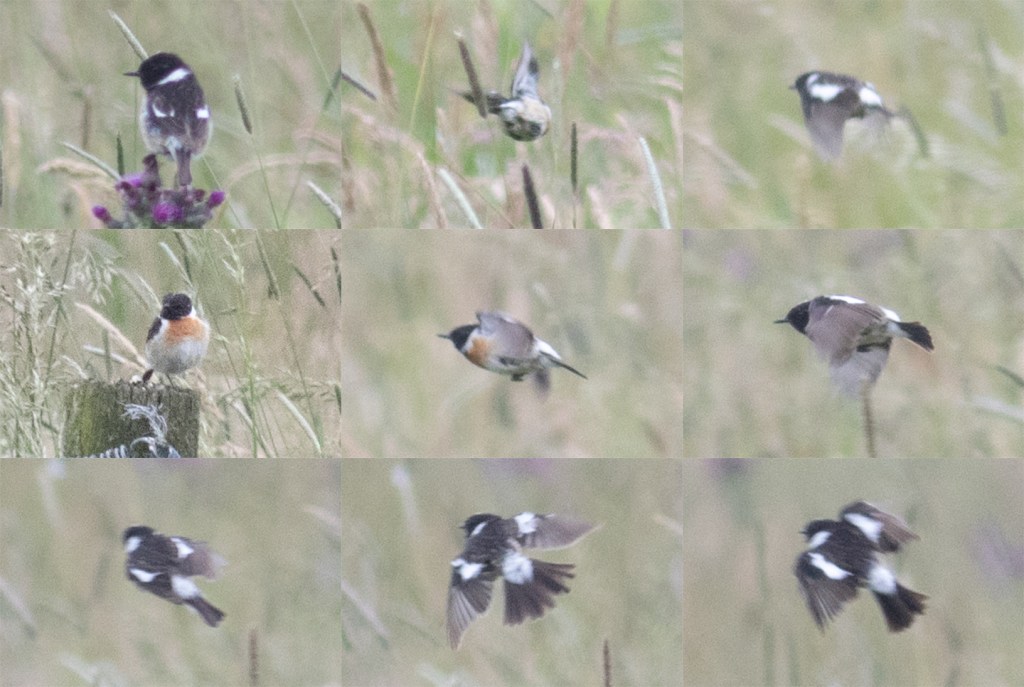
Bird 1 looks the most unusual. Features that could suggest a Siberian Stonechat: a lot of white in the wing, a white rump, white flanks and belly, and a clearly isolated small orange patch on the chest.
However, for a Siberian Stonechat, the underwings are noticeably too light, and flank streaking is present, which might not be very clear in this way.

Bird 2 has a broad white neck band. For a Siberian stonechat, this band should extend further around the back of the neck. However, the flanks are somewhat ‘salmon/orange’ colored. The rump is also clearly white. The orange on the chest should be more concentrated if it were a Siberian Stonechat.
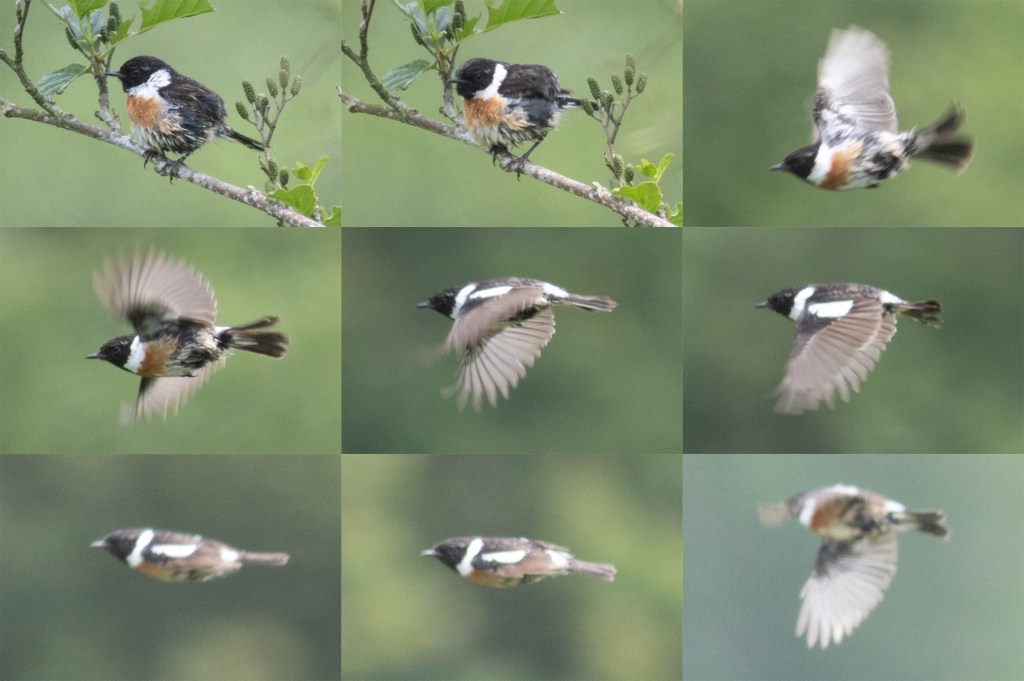
Bird 3 appears fairly wet in the photos due to the rain, which makes the flanks and belly look rather dark. However, the bird has a broad white neck band, a lot of white in the wing, and a white rump.
Here is another Stonechat. This time from Schiermonnikoog. All the photos below are of the same bird.
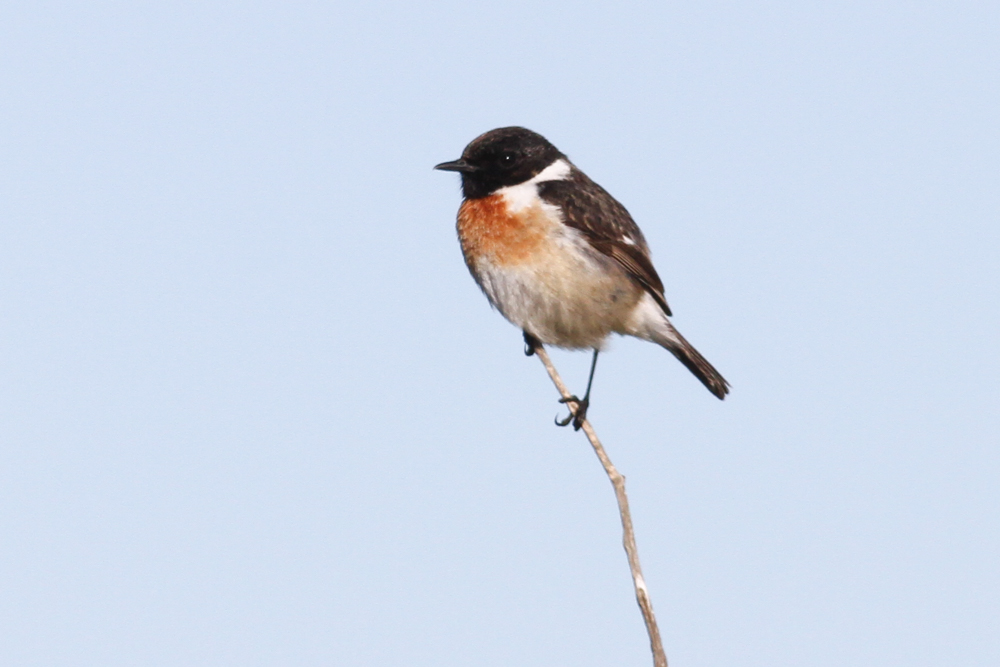
The same bird, different background.
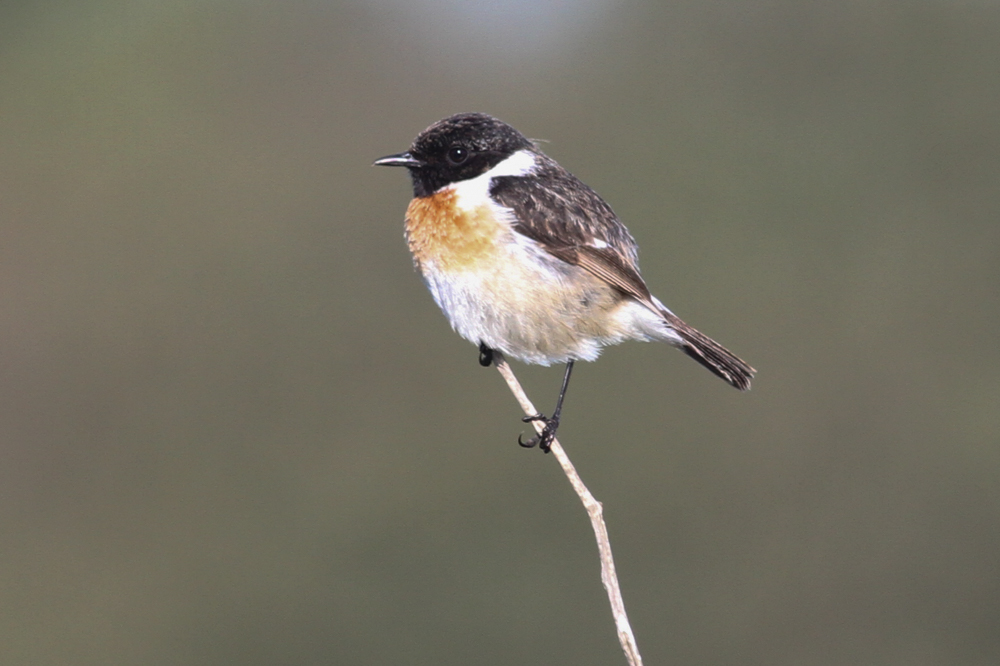
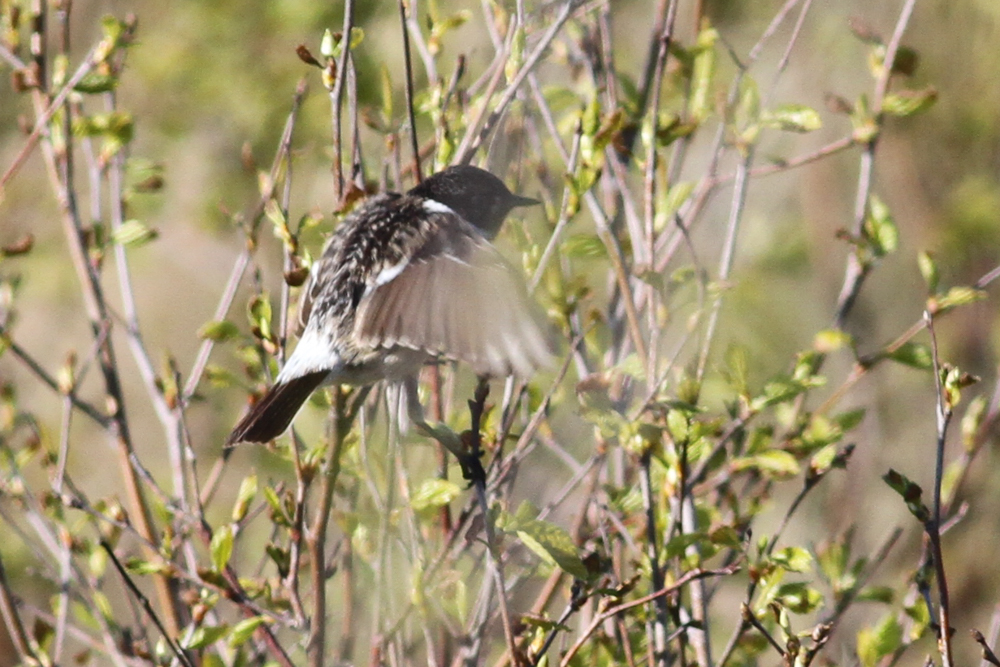
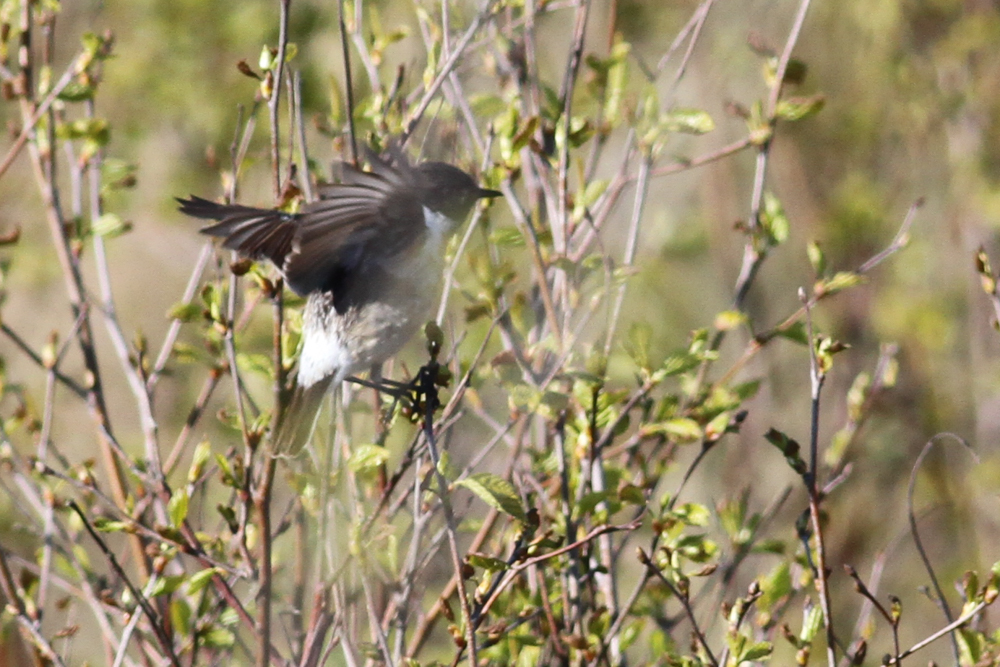

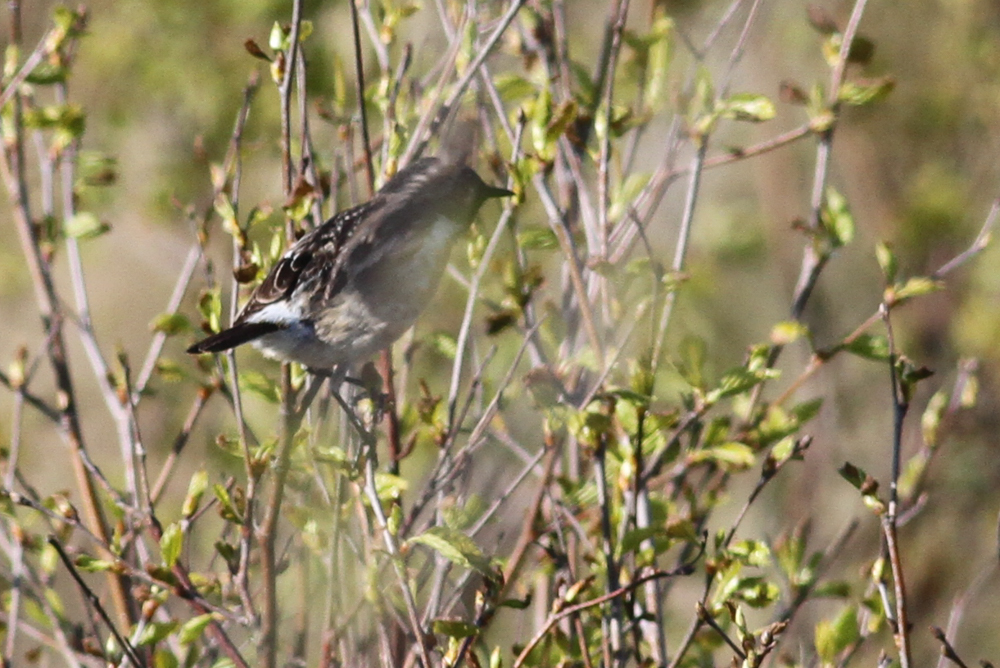

What could argue in favor of a Siberian Stonechat is the thick neck band that extends far around the back of the neck, as well as a white rump. The belly is also fairly white, and the bird seems to have somewhat dark underwings. However, the presence of flank streaks, a too-dark undercolor, and the limited amount of white in the wings argue against this.
What applies to all the birds in this article is that no white is visible in the tail. Eastern Stonechats in spring in northwestern Europe can be very tricky. They are probably often overlooked. That’s why I’ve tried to capture the tail pattern in all these birds, so at least the ‘white-tailed’ eastern Stonechats can be ruled out.
On Helgoland this spring, they had a male Caspian stonechat (Saxicola maurus hemprichii), which wasn’t very easy to identify without the tail. (Search for June 4th or for Caspian Stonechat.)
https://www.oag-helgoland.de/index.php/aktuelle-beobachtungen-2/
If you have any nice photos of stonechats in spring, I would love to see them!

 Invested Birding
Leave a comment