From May 14 to 20, 2024, I went birdwatching in Georgia with three friends. The trip was mainly focused on the mountain species in Kazbegi and species in the lowlands, such as the wild Pheasant, in the southeastern part of the country. While searching for the target species, you often encounter some interesting (migratory) birds. In the mountains, we saw quite a few stonechats, sometimes different taxa together at one place.
In Georgia, both the European Stonechat – Saxicola rubicola rubicola and the Siberian Stonechat – Saxicola maurus breed. Within the latter species, Georgia lies right in the middle of the breeding ranges of the subspecies ‘Caspian stonechat’ ssp. hemprichii and ssp. variegatus. Additionally, ssp. maurus occurs as a migrant. Quite a variety!
In Northwestern Europe, we mainly look at Stonechats in the fall because that is the time when eastern taxa can be found. Spring occurrences are much rarer. All the more exciting to see them now in the spring.
In the next photo, there is a female Siberian Stonechat. Quite a typical light-colored bird with unmarked flanks. I don’t dare to assign a subspecies to it.

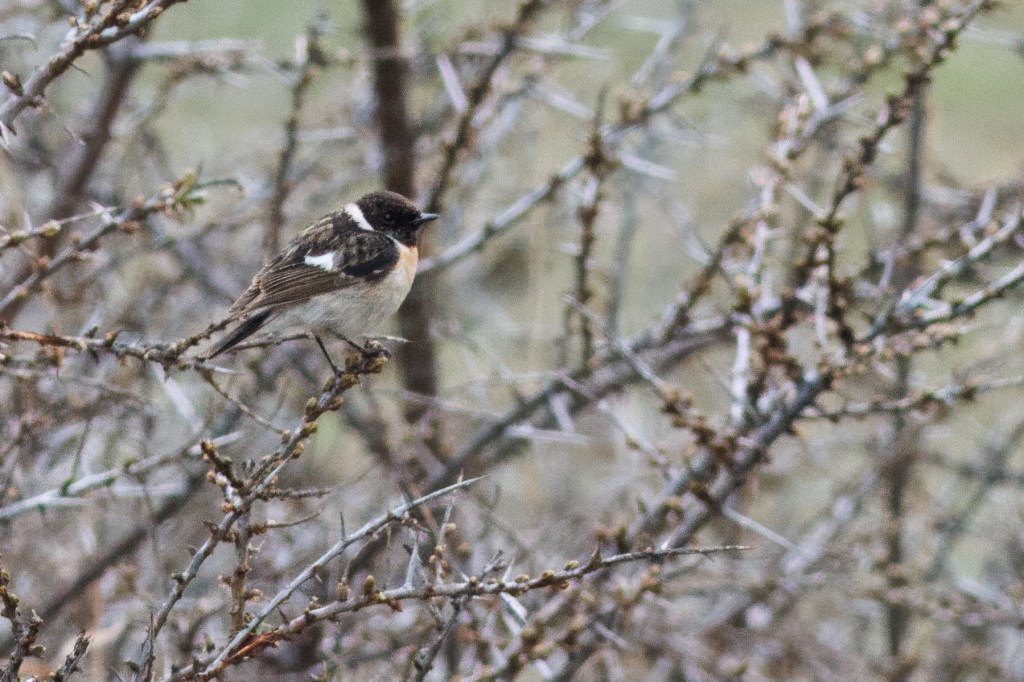
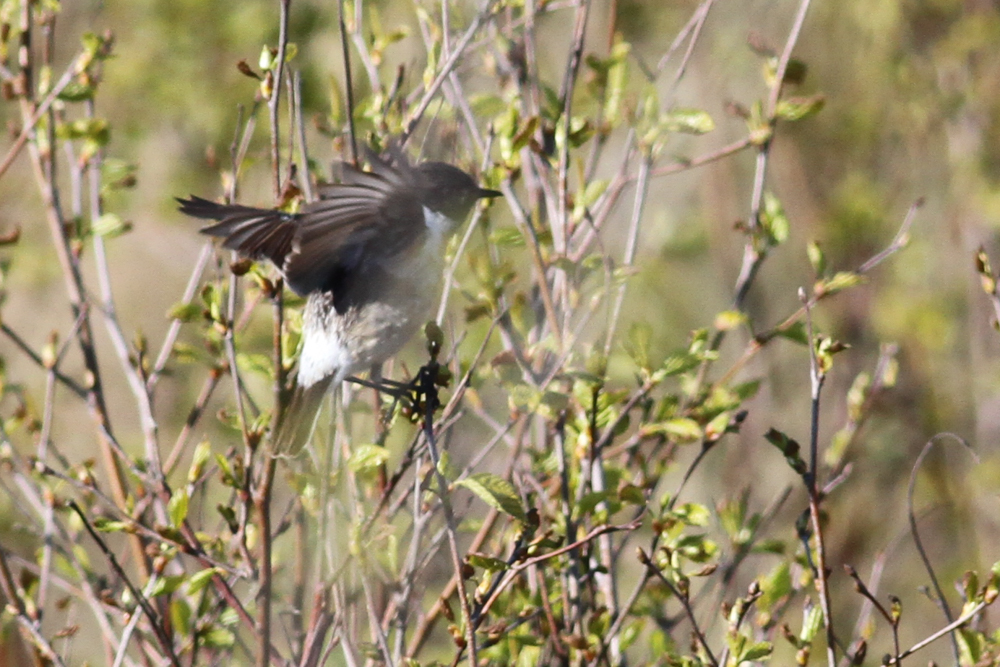
Male Siberian Stonechat. Quite striking due to the softly colored chest and unmarked flanks. The white extends far into the neck and there is a lot of white present in the wing.
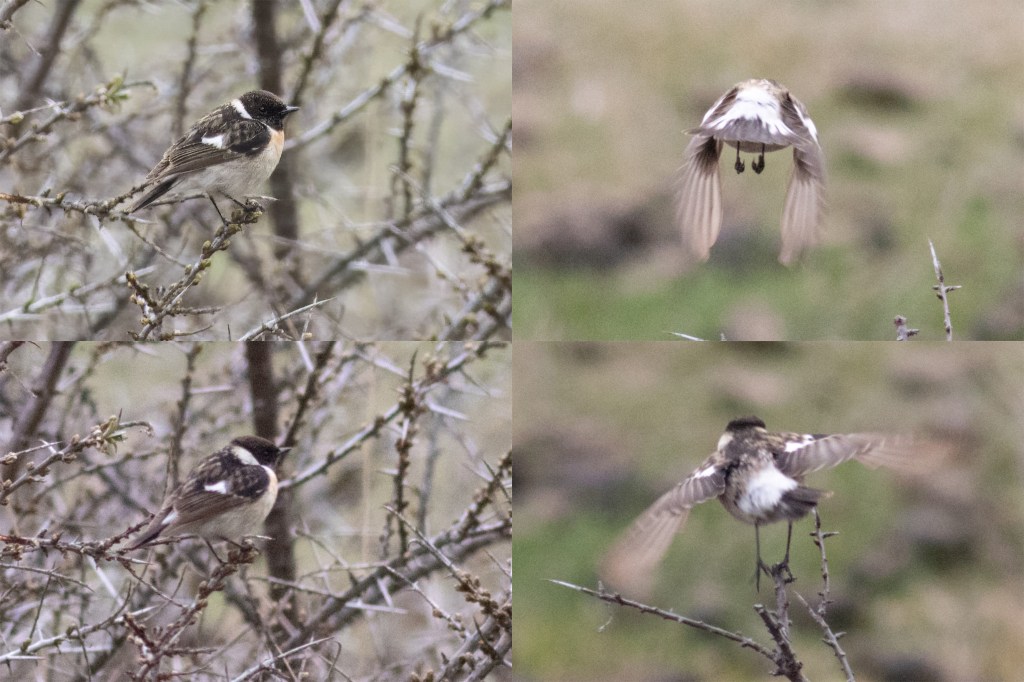
Only on the computer did I see in the flight photos that there was actually white in the tail. I thought I saw it in flight in the field, but it wasn’t noticeable when perched. The photos show that there is quite a bit of white in the tail, mainly on the outer tail feathers. For ssp. variegatus, this is too much white. In that subspecies, the white extends at most to 1/4 of the tail. Here it extends to half (though it’s difficult to estimate in these photos), so I would classify this as ssp. hemprichii. When I look at other photos of this subspecies, it seems that the white extends much further towards the end of the tail. It is notable that it’s almost not visible in the photos of the bird when perched. Comments welcome.
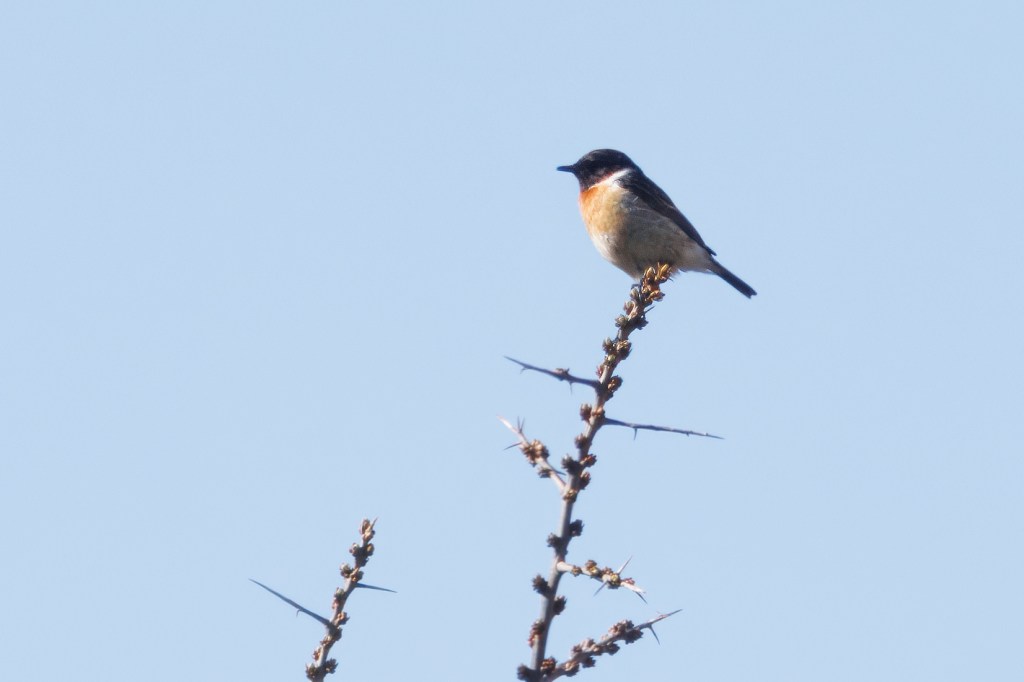
Below is a quite clearly identifiable male European Stonechat with a somewhat concentrated orange pattern on the chest. This could suggest an Asian Stonechat, but it is not actually contrasting enough for that. Additionally, there is also flank streaking present, the white does not extend far enough into the neck, and there is hardly any white patterning present in the wing.
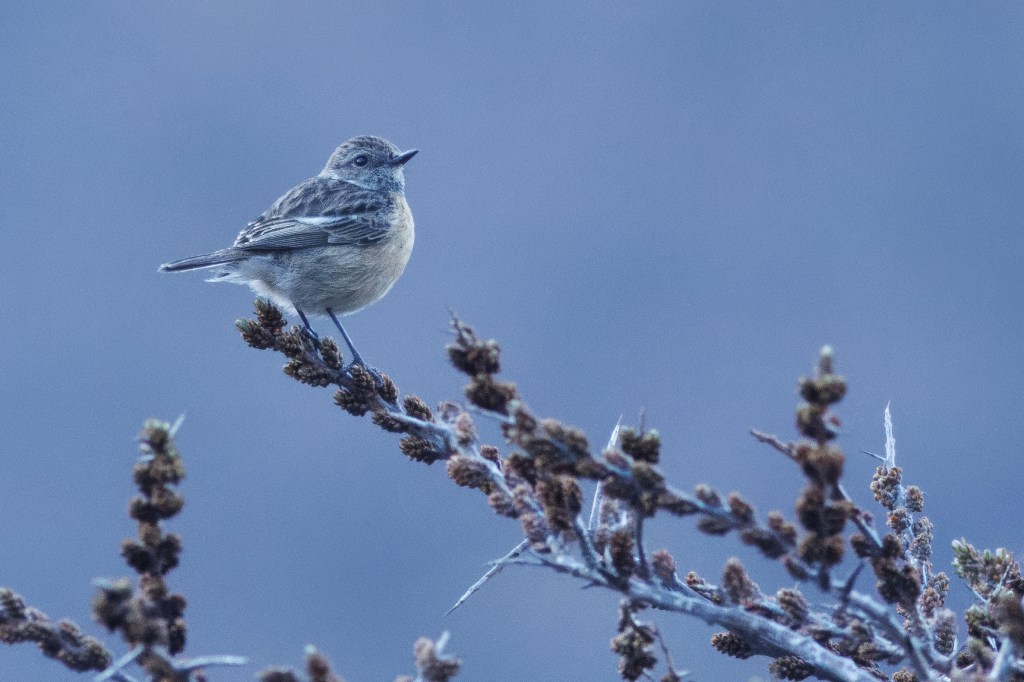
And yet another very light female Asian Stonechat, for which I also don’t dare to assign a subspecies. In the field, the bird reminded me somewhat of the spring occurrence of ssp. hemprichii on Texel.

And another close-up of this bird.

Lastly, a female European Stonechat. Flank streaking present. Definitely a somewhat muddled flank and chest. Also, a lot of black patterning on the throat, which is not typical for Asian Stonechat.
If there are any questions or comments about the subspecies or plumage of the birds above, I would be happy to hear them!


 Invested Birding
Leave a reply to gijsbert twigt Cancel reply